CIRQUE MAXIME
As its name proclaims, the Circus Maximus was Rome’s largest stadium which hosted hundreds of thousands of raucous, cheering fans as charioteers competed for the crown of champion. Like any modern horse-racing venue, tensions were high as fortunes could be made or last in the blink of an eye. While modern-day visitors can only see the remains of the track, a bit of imagination can reveal the glorious days of the Circus Maximus’ past.
According to legend, the Circus Maximus was founded in the 6th century BC by the last of the kings. The Circus is Rome’s oldest and largest space. Originally used for the annual Ludi Romani ‘The Roman Games’ which included chariot racing and military displays; the stadium also hosted other types of shows for large audiences like grand venationes (animal hunts), mass executions and before the colosseum, gladiator contests. As the largest meeting place of the city it was also used for religious and triumphal processions.
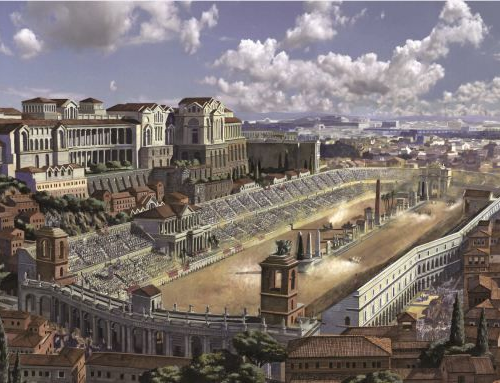
At its largest (under Trajan in the 100s AD) the circus held around 250,000 spectators – more than four times than could fit in the Colosseum. The seating sections were 30 m wide and 28 m high with the lower two tiers made of stone and concrete, while the higher tiers were made of wood.
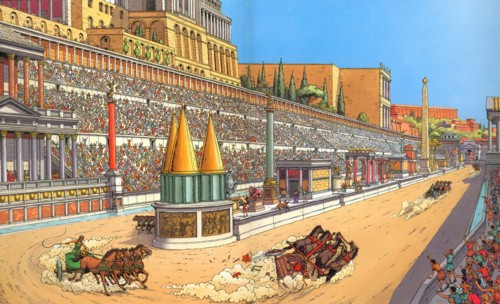
The racing track (9 metres below the current level) measured 540 x 80 m and was originally covered in sand. Down the middle of the track was a raised barrier called the spina (still visible) – this was richly decorated, including an obelisk brought from Heliopolis by Augustus in 10 BC (that now stands in Piazza del Popolo). Much later in 357 AD Constantius I (Constantine’s son) brought another obelisk (the largest in Rome) to add to the decorations (Piazza San Giovanni today).
The 12 starting gates of the race were located at the river end of the circus, the chariots that participated in the races were pulled by teams of horses (ranging from 4 to 12 animals) and were color-coded – the greens, whites, reds and blues. The aim was to be the first to finish – to outrun the other chariots or force them onto the central spina or off the track. The chariot races were a dangerous and exciting spectacle,
everyone had their favourite spot, mostly seated around the turning end where there was a great view of the crashes as the charioteers raced to make the curve.
Victory brought huge sums of money and popularity for the charioteers who earned roughly 4 times a modern formula-one driver per race, the horses became popular as well. Everyone had their favourite teams and the spectators, like our modern sports fans could go over the top. There are stories of spectators breaking out into fights and even killing each other! The races were an excellent betting opportunity, fortunes could be made or lives ruined.