OSTIE ANTIQUE
Ostia Antica, a mere 26km from Rome was the harbour city of Ancient Rome. Often called the ‘Roman Pompeii’, the archaeological site is an example of a working-class Roman town. Ostia Antica is often missed by tourists as it is not as well-known as Pompeii, Herculaneum or Ephesus but wandering through the paved streets, apartment blocks and warehouses towering above give a wonderful impression and allow the visitor to imagine the lives of the civilization that once thrived here.
The main port of Rome in the beginning of the empire, it was here that goods arrived from all over the Roman world; from grain, oil and wine to more precious luxury items. During ancient times the city was a thriving hub of activity supporting the city of Rome for around three hundred years. After Rome’s collapse, it was abandoned, silted over and is in an extraordinary state of preservation. Today visitors can explore the town and get a glimpse of how ordinary ancient Romans lived. The ruins are nestled among pine trees and offer a welcome break from the hustle and bustle of the city of Rome.
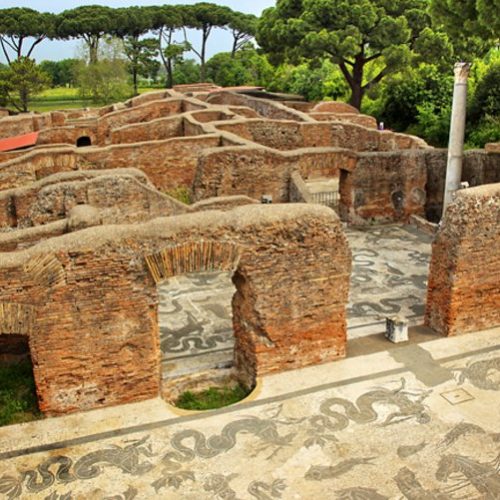
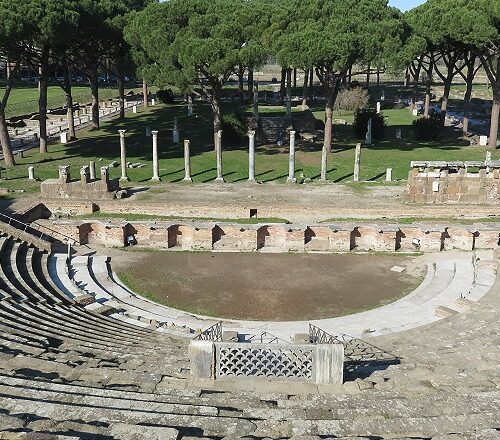
Highlights of the site are undoubtedly the Baths of Neptune, where from a raised platform you can see the monochrome mosaics of Neptune in his chariot and in the room beside him, his partner Amphitrite. The Theatre is truly impressive and is in excellent condition – it is still used today for modern performances; the only part missing is the grand stage building. Beside the theatre the huge square known as the Piazza of the Corporations is surrounded by offices used by different shipping traders and businesses, the mosaics reflect the type of trade or the location they shipped to.
The main street of Ostia Antica leads visitors past remains of shopping arcades, public baths, apartment blocks and warehouses. Unlike Pompeii, the buildings in Ostia rise to three or four levels and offer a glimpse of daily life in the shops and bars – particularly the Thermopolium or tavern with its street front bar with containers that would have been filled with food or drink. The well-preserved Bakery where we can still see the millstones for grinding flour and the ovens where bread was baked. At the centre of the town is the Forum, with the Capitoline temple which still towers above the other buildings. Beside this are the remains of a huge complex of public baths, known as the Forum Baths, with the best-preserved public toilet in Europe!
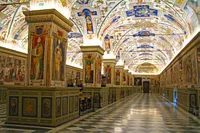
The extensive grounds of the archaeological site offer a rare glimpse of an ancient Roman town. There are no coloured frescoes like in Pompeii, but there are plenty of black and white mosaics which remind us this was a working port town, there were wealthy traders and businessmen living in Ostia, but the coloured mosaics from their houses are no longer here; they have however been preserved in the Vatican museums (DRome/VATICAN MUSEUMS) so be sure to look down when you visit!
Ostia Antica is 25 minutes from Rome by train, easily reached from the Lido train station at Porta San Paolo (next to the Piramide metro station).