PLACES ET FONTAINES
Rome is one of the most beautiful cities in the world, an open-air museum with a piece of history on every corner. Ancient buildings and archaeological remains mix with beautiful squares with elegant architecture, piazzas are lined with tables from which you can watch the world go by and visitors and locals alike gather at the picturesque fountains. After a long day of exploring, these beautiful squares offer visitors the perfect place to soak up the atmosphere of the city, take a well-deserved respite from sight seeing or just a chance for a sit-down and a bit of people watching.
Rome has many piazzas or squares, everyone has their favourite; some are grand and are decorated with sculptural reliefs, many are decorated with a central fountain which was once the hub of the immediate area, most have at least one church, some are oddly shaped and known only to the locals; but each has a story to tell.
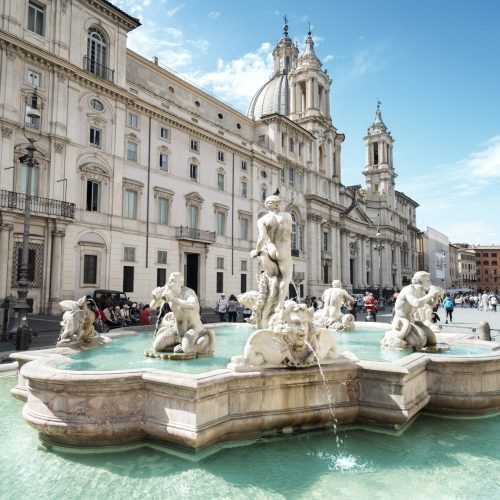
Piazza Navona is by far the most well-known of Rome’s grandiose squares, its shape today is dictated by the ancient roman running track below, the Stadium of Domitian. Above ground it is lined with grand palaces and a church and boasts three fountains set amid a backdrop of triumphant Baroque architecture. The centrepiece is the stunning fountain of the Four Rivers, sculpted by the great artist Bernini who changed the face of Rome. This bustling piazza is a favourite among visitors, its sides lined with bars and restaurants for an aperitivo, the square often hosts markets at Christmas time.
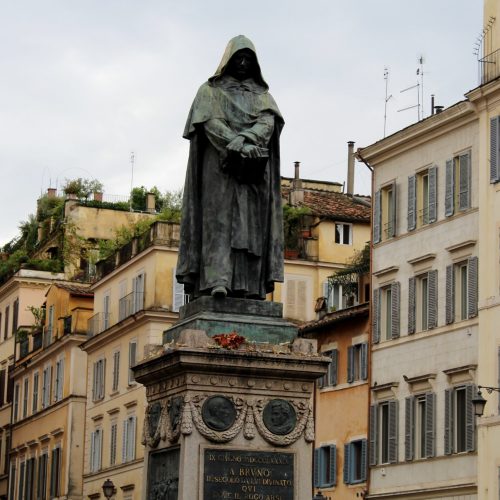
Just across the Corso Vittorio road lies Campo dei Fiori, a much smaller square with a slightly alternative feel. The only square in Rome without a church, this was an execution spot for the inquisition. In the middle of the square stands a statue of Giordano Bruno who glares
down at the people doing their vegetable shopping at the daily fruit and vegetable market. By late afternoon, the stalls are gone and the square comes to life with a slightly younger crowd including foreign students who come for the Aperitivo’s and the lively atmosphere.
Slightly further down the Corso Vittorio and slightly inland and we come to the Piazza Della Rotunda which is dominated by the Pantheon, its impressive façade lies in wait as you make your way through the cobblestoned streets. The central fountain was one of the first to be built in the 1550s after the aqueducts were repaired and Rome once again became the city of water, today the fountain sports an obelisk like many other squares.
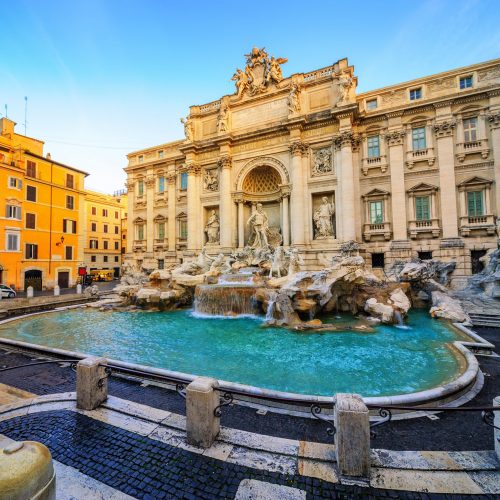
The most impressive and best-known of all fountains in Rome is undoubtedly the Trevi Fountain. It is an iconic symbol of Rome which dominates the small piazza which today is almost non-existent. There has always been a fountain on this site since 19 BC when the Aqua Virgo aqueduct was built. The Trevi marks the spot where the freshest, coldest water in Rome comes in from over 23km away to the east and with all its drama and flamboyance it represents the importance of water for mankind.
Just a few minutes’ walk away, you will find the so-called Spanish Steps in Piazza di Spagna, the square is dominated by the beautiful staircase. Built on three levels from the Spanish square to the French church Trinita dei Monti, the design was intended to celebrate peace and represent a friendly handshake between the Spanish and the French who had just finished fighting each other in the 30-year war.
Slightly further down the Corso Vittorio and slightly inland and we come to the Piazza Della Rotunda which is dominated by the Pantheon, its impressive façade lies in wait as you make your way through the cobblestoned streets. The central fountain was one of the first to be built in the 1550s after the aqueducts were repaired and Rome once again became the city of water, today the fountain sports an obelisk like many other squares.