Overview
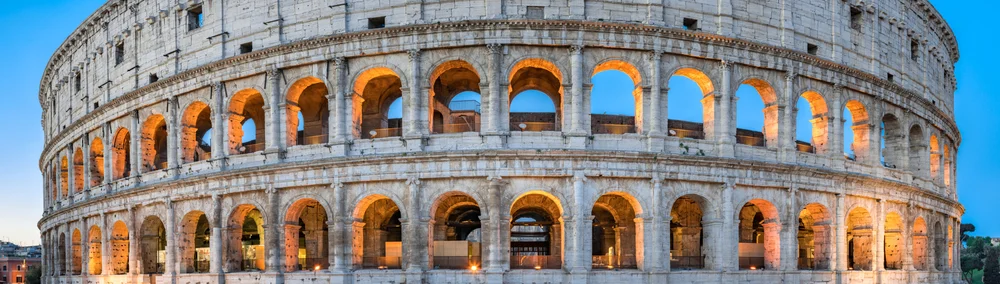
So, you are coming to Rome and of course you want to visit the Colosseum. The Colosseum is the ultimate icon of the power and might of the ancient Roman Empire. For that very reason it is the MOST visited site in Rome and Italy with 7.5 million visitors in 2019. There are a number of different options for visiting the colosseum; there is the standard ticket, arena entrance and the underground – it can be confusing – so what is the difference in these parts of the colosseum and are they worth it? All tickets to the Colosseum include access to the Roman Forum and Palatine Hill – the city centre and Beverly hills of ancient Rome.
Highlights
Looking over the arena from behind the cross (ground level)
Ludus Magnus from above (second level)
Exhibition – machine reconstructions, statues, graffiti, food items and animal skulls
Colosseum Model - reconstruction in wood
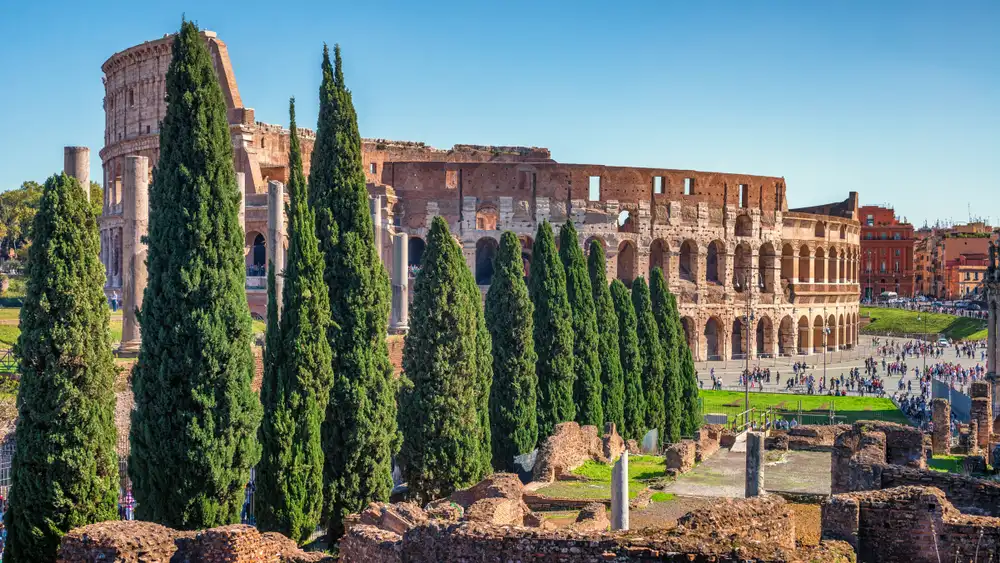
Viewing platforms above the two-long axis with views over the arena
Viewpoint over Arch of Constantine and Temple of Venus and Roma
History
The Colosseum was conceived by the Emperor Vespasian who followed after Nero, he wanted to make his mark and so constructed the first permanent amphitheatre in Rome. The ‘Flavian Amphitheatre’ as it was known was built on the site of the lake of the golden house of Nero. It took 10 years to build from lake to stadium, two years to drain the lake and dig foundations and a further 8 to mostly complete the superstructure. Vespasian died in 79 A.D. and his son Titus completed and inaugurated the building in 80 A.D. with 100 days of games. Over the next three hundred years the building was added to, damaged and repaired and then in the 6th century abandoned. Rome could no longer afford the lavish games.
Interesting facts
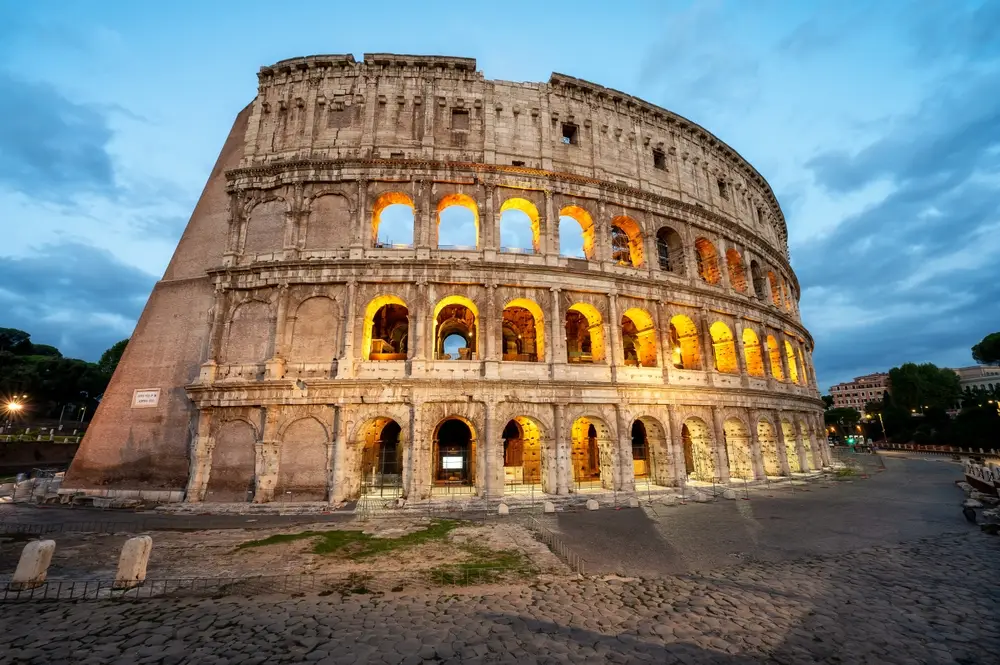
The Colosseum is the largest amphitheatre ever built in the Roman empire. It is 48.5m high, 188m long and 156m wide.
Over 100,000 cubic metres of travertine were used in the Colosseum, mostly for the outside and the arches. This equates to 300 carts a day for 6 years driving to Tivoli and back (33km).
Over 300 tonnes of iron were removed from the colosseum leaving it looking look a Swiss cheese.
It is estimated around 250,000 people worked on the Colosseum. They were certainly not all slaves but skilled tradesmen like engineers, architects, carpenters, scaffolders, stonemasons and sculptors, brick layers, brick makers and basket weavers to name just a few.
The Colosseum metro built in 1937 curves around the colosseum. It runs along the south-west end of the colosseum between the Colosseum and the Arch of Constantine. Sometimes you can feel the vibrations underground.
In 2018 Beyoncé and Jay-Z were denied permission to film a music video inside the colosseum for their ‘On the Run’ tour.
Discover More


Frequently Asked Questions
How many spectators?
Modern estimates often say 50,000 spectators but evidence from the 4th century A.D. suggests as many as 87,000 people – remember the ancient Romans were smaller than us!
What happened to the seats?
Earthquakes caused the Colosseum's brick and concrete substructure to collapse first, sending the marble seats crumbling and they were quickly taken and recycled.
Did Spartacus fight here?
No. Spartacus lived a century before the Colosseum was built, he trained and fought at the amphitheatre in Capua near Naples.
How did you get a ticket?
Colosseum tickets were free, likely distributed by whoever funded the games. Friends of friends? First come first served? Senators had named seats, the rest remains a mystery!
What are all the holes on the outside?
The Colosseum's travertine blocks were held together with iron pins, not mortar. Centuries later, Romans recycled the iron, leaving the holes we see in the walls today.
How often were the games?
Games were held in Rome for different religious festivals through the year. The Colosseum wasn't always open, games were very expensive to put on so they were around 5 days.