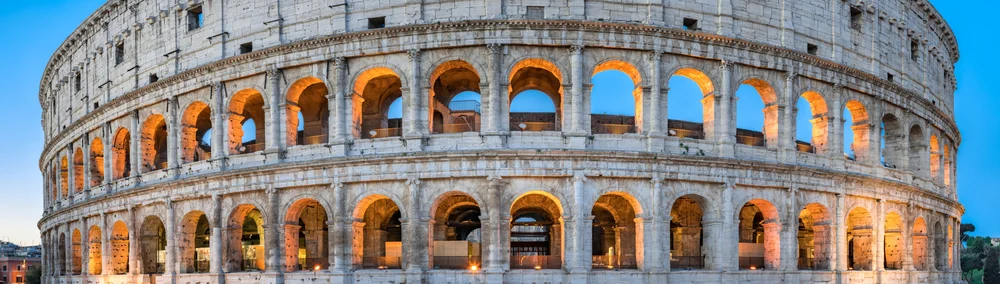
Overview
The Palatine Hill is one of the most important of the Seven Hills of Rome – This is where it all started! According to legend, the twins Romulus and Remus were found here and suckled by a she-wolf in a cave called the Lupercal. This foundation myth of Rome tells us this was also the hill chosen by Romulus for his new city. After slaying Remus (who had chosen the Aventine hill), he set up a boundary and founded the city of Rome (753 BC). The Palatine is 40 meters above the Roman Forum, and overlooks the ancient ruins of the Forum on the northern side and the Circus Maximus on the southern.
The Palatine is included in the ticket for the colosseum and forum but is often missed in the height of summer because of the incline and the heat. You shouldn’t miss out on this beautiful area though; it is shaded by pine trees – a green haven that is surprisingly peaceful and offers stunning panoramic views of Rome.
Highlights
Farnese Gardens – Built in the 1550s, this was a garden pavilion (with a sunken cave fountain) which had gardens, vineyards and aviaries.
Viewing platform overlooking the Roman Forum – Gives a birds-eye view of the whole forum!
Viewing platform overlooking the Circus Maximus – Look down onto a long field in a valley (once the largest chariot racing stadium ever that could seat 250,000 spectators.
Domitian’s sunken garden – called the hippodrome or stadium, probably a huge internal garden which was surrounded by a covered two storey portico with fountains at the far end.
Domitian’s winter dining room (behind the museum) – notice the collapsed marble floor, this was a dining room which once had under-floor heating!
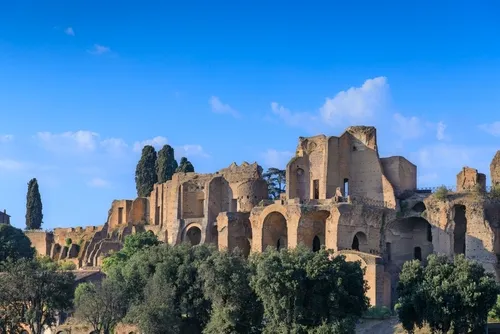
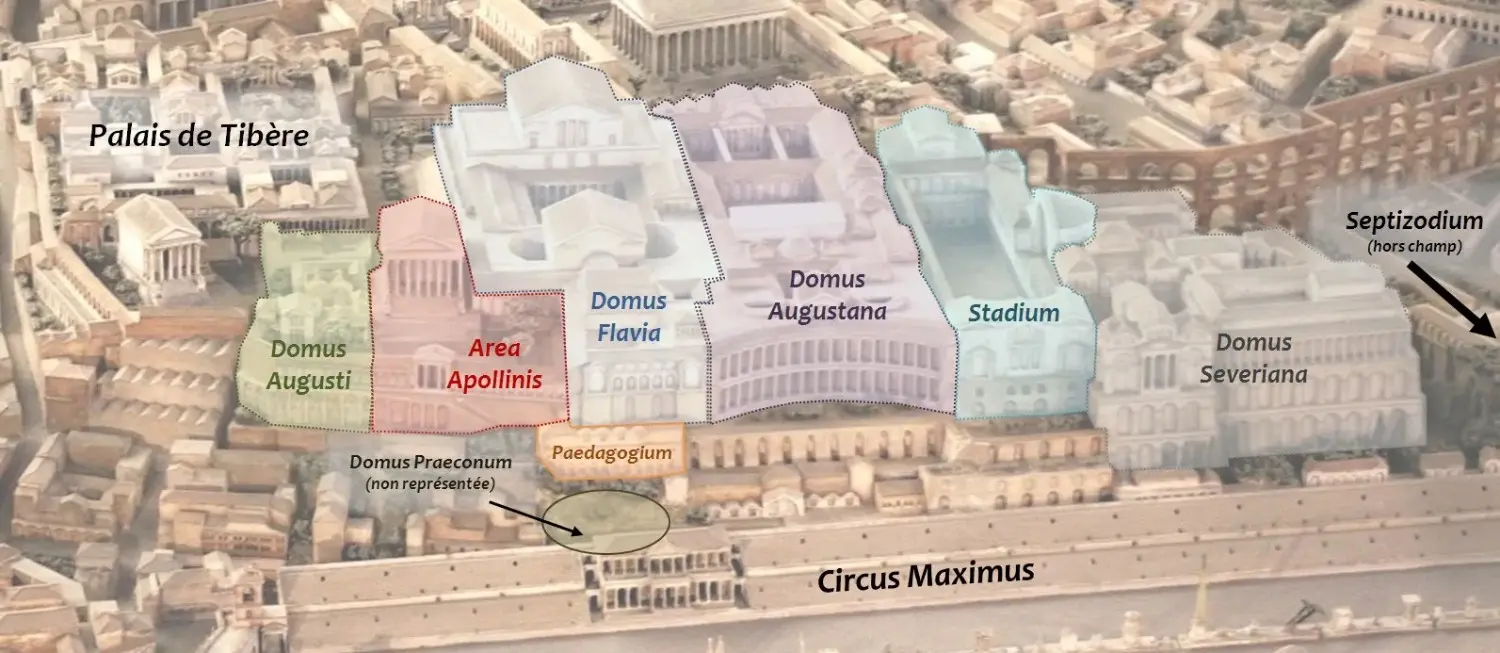
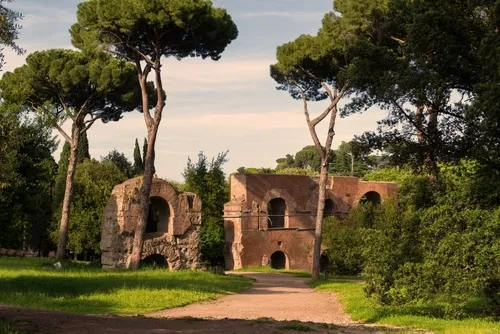
Explore the History of the Palatine Hill


Interesting facts
The etymology of the word palace in English (French, Italian and many other languages) comes directly from the palatine hill. It was the hill with THE imperial palace on top!
Domitian’s palace was the biggest and richest structure of all, his architect Rabirius achieved feats of constructional engineering not seen before in Rome. Parts of the lavish structure—the richly marbled, centrally heated living room can be seen today.
Archaeologists cannot prove or disprove Romulus and Remus but in 2007 a vaulted sanctuary thought to be the long-lost Lupercal was discovered 52 feet (16 metres) below the surface of the Palatine.
An extension of the Aqua Claudia Aqueduct was built by Domitian to bring water directly up to his palace for the fountains and baths – In the 1st century A.D there were huge gushing fountains on the hill.
Discover More


Frequently Asked Questions
What happened to the buildings?
Two levels of the palace are beneath what we can see today , the gardens you look down on were the palaces and the wall of the top level have collapsed.
Where is the marble?
Like most of the Roman Forum, it was taken and recycled, much lies on church and palace floors today. Some was powdered into dust to make plaster for other Roman buildings.
Who lived up here?
Rome's elite lived on the Palatine from the earliest days. Cicero, Mark Antony and Augustus all had homes here. After Domitian, it became the seat of imperial power for centuries.
What are the huge brick arched vaults?
The vast brick arches are substructures that artificially expanded the hill. Originally lined with terraces, baths and shops, what remains today is the skeleton of a man-made hill.